Tuesday, 6 February 2018

Storyboard of images


  • Using DTP (Publisher) and an image manipulation programme, product the first draft posters. If you are yet to take any images, you will have to make them using place-holder found images.
  • Look at another student's blog and leave some feedback (constructive peer assessment with WWW and EBI) as a comment.

the images outlined in red are the ones that i have chosen to use for my posters. i chose that particular image of Katie because she looks happy and is smiling towards the camera. this creates the idea that she is happy and comfortable in the clothing that i am selling to the audience. i like how she looks relaxed in the pose that she is in. with her arms above her head, the audience can see more of the jumper she is wearing which draws more attention to it. her body is very stretched out to create the impression that she is showing off the clothes on her body. the group photo of the girls that i chose is my favourite because they all look happy and satisfied in their clothing. it is noticeable that all the girls are facing in different directions which links well with the different positions that they are in. this promotes variety and difference which is a key part of fair trade. 


Friday, 2 February 2018

Statement of Intent

  • Media Language (conventions of the products)
  • Media Audience (Target Audience)
  • Media Representation (How the message is constructed about groups of people and how the audience relate to these constructions)
  • Media Industries (The companies behind the products, the legal considerations and how profit is generated by the products. Considerations relating to cross-media platforms and where products will appear as part of the campaign.).
1. How do you intend to use the four areas of the media theoretical framework to communicate meaning and meet the requirements of your chosen brief? (approx. 400 words) 
  • Product 1: Two Billboard Posters
  • Product 2: Moving Image Advertisement
I have made sure that my two billboard posters will include specific media language conventions that will appeal to the target audience. I intend to use a clear image of the model wearing the clothes that i am advertising so that it is obvious what i am trying to sell. The model will be made to look attractive to the audience by making her wear makeup and have her hair in a suitable style. The brand name and fairtrade logo will be colour co-ordinated with the image of the model and the background of the poster to make the poster look neat and appealing. The fairtrade logo will be colour co-ordinated with the brand name to make it clear to the target audience that 'Juste Clothing' is associated with fairtrade. the brand name that i have chosen (Juste) has a clear meaning as it translates to 'fair' in English, therefore it links well with the brief and follows the convention that brand names are often linked with what theyre selling.  

I intend to use the remove background tool on the computer in order to put the image of my model infront of a tree/a field. This background image links well with the idea that the clothing is from a natural source. It also portrays the sense that the earth is beautiful and it should be taken care of. Other fairtrade campaigns include many images of the world therefore i decided that it would be sensible to include it on my posters. 

I will be using a young teenage girl in the poster to reflect the young target audience. The target audience would see themselves in the product meaning that the product appeals to them. The demographics B, C1, C2 would be the most suitable because these people tend to have decent pad jobs therefore they would be able to afford the clothing that is moderately priced due to the fair wages that are paid to the workers .

The posters that i will create would be seen primarily on social media because social media is an extremely powerful advertising tool. The plan is to get as much attention as possible onto the idea of fair trade clothing can be fashionable. 

my role within the marketing campaign is ...

2. How will you link your posters to demonstrate your knowledge about digital convergence  of your media production? (approx. 100 words) 

they will have the same colour brand name and font. they will both have a natural background, such as a field or a tree. the model will be wearing similar coloured clothing 


Tuesday, 30 January 2018

Fair Trade Research

by changing the way trade works, the farmers in developing countries can get better pay and better living conditions.


Fairtrade is unique. We work with businesses, consumers and campaigners. Farmers and workers have an equal say in everything we do. Empowerment is at the core of who we are.  

We have a vision: a world in which all producers can enjoy secure and sustainable livelihoods, fulfil their potential and decide on their future.

Our mission is to connect disadvantaged producers and consumers, promote fairer trading conditions and empower producers to combat poverty, strengthen their position and take more control over their lives.

Fairtrade sets standards, certifies products and ingredients, works with companies’ own schemes, lobbies government, works directly with producers, drive awareness for the public. 


Tell your customers about the impact that you and Fairtrade are having on the lives of your suppliers. We can help you find out how the suppliers you work with have benefited from their Fairtrade certification and tell that story in a compelling way.

  • Connect with Fairtrade’s UK supporters, including 118,000 Facebook and 98,000 Twitter followers. Keep them up to date with your business and its links to Fairtrade.
  • Feature in our newsletter: Our campaigners love to support businesses working with Fairtrade. Our newsletter goes out quarterly to 29,000 of them and you can tell them about your work with the Foundation, national and local events and campaigns and new products you are releasing or stocking

Monday, 22 January 2018

Pre-production planning - mock up logo and posters

INFO

Task: produce a campaign of two '6-sheet' billboard posters to promote a new clothing range from Fair Trade Fashion, an existing agency client.

Brief: Fair Trade Fashion’s clothing ranges are ethically source and Fair Trade Fashion has specified that this must be a key part of the campaign in addition to ‘selling’ the clothes themselves.

Summary of brief requirements:
  • Statement of Intent (approx 350 words)
  • Billboard posters: The client has insisted that each poster must have a different main image, with at least two different locations or at least two different mise-en-scene used across your posters. 
  • Location of posters: Content must be suitable for public transport locations (bus stops, underground stations etc.).
  • Client target audience: 16-25 AB demographic.
  • Two A4 size posters in portrait layout.
The two different images must be original and written text needs to include the product name and slogan/tagline.
Marks are awarded for editing the posters (including photos, text, graphics, typography and layout). 
The best projects will have characters demonstrating different aspects of the clothing range (different costume). 
If you use the same location then mise-en-scene or lighting must be varied. 
Strong work will represent different social groups and carefully consider where the adverts will be displayed in public places to target the right people.

Fair Trade Fashion is all about the ethics of clothes manufacturing and waste.
Protecting cotton farmers, producers, garment workers and artisans in the developing world from exploitation via working practises and pricing from large companies.
Reducing the environmental impact of manufacturing and waste caused by fast fashion.
Raising consumer awareness to help them make ethically sound buying choices.

PLANNING


This is the logo that I have designed for 'Fair trade clothing'. I will use this on my poster to show the audience that the material used for the clothes is part of Fairtrade. I designed it so that the F and T merge into each other and the C protects them on the outside. This conveys the idea that by working together, we can protect others.

From the initial drawing shown above, I have created the logo on the computer so that it looks more professional and effective when put in the corner of the poster. 

I have also created a possible brand logo. I like it because it is colourful and eye-catching. The flowers give the impression that the brand is natural and beautiful. I chose the earthy green colour for the brand name to reflect the fact that the company has a link to the earth as it helps people have a better life and promotes sustainable farming. I chose the name 'Juste' as the brand name because it means 'fair' in French. 

This is another possible logo for the brand.


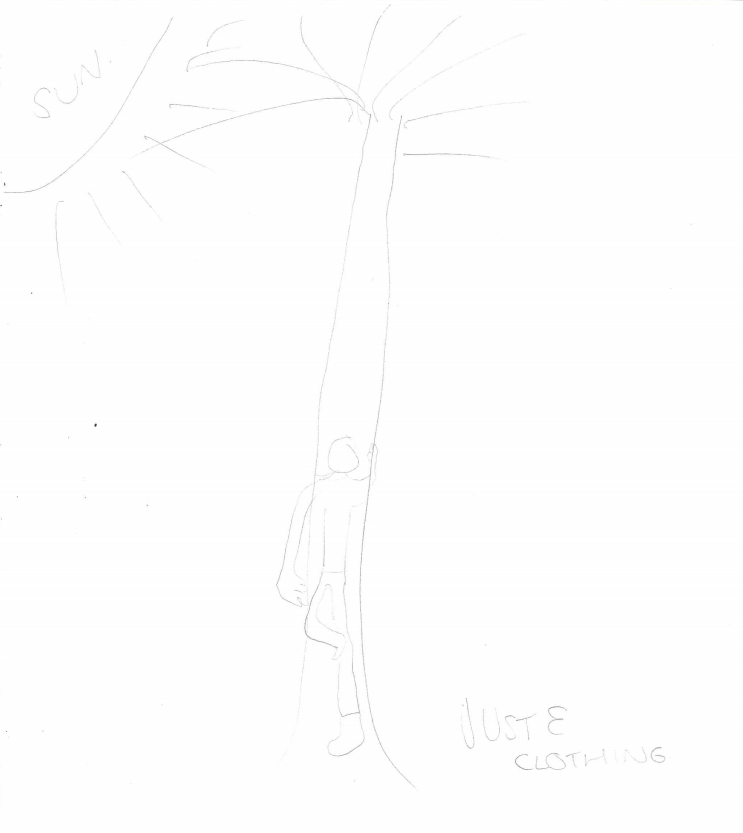
The image on the left is a mock-up of how I want my first poster to look. I will get my model to wear summery, pretty clothing and edit the picture of them onto a field background. In the corner I have included the Fairtrade clothing logo to show that the clothing that the model is wearing is Fairtrade. The model looks happy which suggests to the audience that the brand has a positive effect on people.


this is the other poster that i have created as an idea for 


Thursday, 18 January 2018

New tabloid Guardian newspaper (left wing)

 “a modern print format for a new generation of readers” and the “best of both worlds”, combining “the portability of a tabloid with the sensibility of a broadsheet”.

No longer are redesigns about selling more copies. They are about saving money.

newspaper is no longer as distinctive as it was when it was the only Berliner in town.

The Guardian, which made a loss of £45 million (€51 million) in the year to last April, is drawing a thick line under its 2005 investment and perhaps moving closer to the finish line of its history as a print product.

It may not be part of its current plans, but it would hardly be a shock were it to follow the London Independent out of the print market, stopping the presses completely and existing only online.

The shift to a tabloid print size is part of several moves, from cutting around 300 jobs to selling a stake in a trade publication group

The Guardian’s style of journalism will not change, but the new format allows it to be printed by a wider array of presses, helping it cut costs

“It’s very neat, very gray, and rather kind of middle-aged,” Mr. Hillman said. “Visually, this is a step backward.”

Wednesday, 17 January 2018

Ethical Marketing Examples

Examples of marketing campaigns that use the idea of Fair Trade to sell their product explicitly through their advertising...

Ethical Marketing Example #1: TOMS

TOMS has a general desire to promote the welfare of others; it is the core part of the company's values and brand. TOMS was founded by Blake Mycoskie in 2006 following a trip to Argentina. During his visit, Mycoskie saw firsthand how people living in impoverished areas of Argentina had to live without shoes, a challenge that many of us likely give little thought. Inspired by his trip, Mycoskie decided to establish his company with giving in mind.

How Does TOMS Use Ethical Marketing?

TOMS puts its social and environmental philanthropy on full display in virtually every aspect of its branding. This not only lets potential customers know the kind of company they’re dealing with right off the bat, but also reinforces TOMS’ brand values consistently across all channels.
On the TOMS’ homepage, right underneath the carousel, the company tells you that, for every product you purchase, TOMS will help someone in need:

TOMS’ mission is so central to the company’s branding, it’s given almost equal emphasis on its website as the products it sells. In fact, it’s almost impossible to navigate through TOMS’ site without seeing further examples of how TOMS helps people around the world.
This isn’t a typically cynical attempt to capitalize on empty gestures or a feel-good sales tactic; it’s the same principle leveraged by brands that use display advertising. Just as many display ads are designed to promote brand awareness and achieve top-of-mind presence among consumers, TOMS’ philanthropic mission is constantly reinforced throughout its website and marketing materials. As a result, it’s almost impossible to think of TOMS as a brand without thinking of the company’s various outreach projects and corporate giving initiatives.

Ethical Marketing Example #2: Everlane

In light of greater awareness about the use of sweatshops, demand for ethically made clothing has soared in recent years, a trend that has given rise to dozens of companies that want to change how we make and view clothing, including Everlane.
Founded in 2010 by Michael Preysman, Everlane is boldly committed to ethical manufacturing. All of Everlane’s garments are made in factories that meet the most stringent quality standards – not only in terms of the clothes themselves, but also in how workers are treated. Everlane only partners with manufacturers that demonstrate a strong commitment to their workers’ welfare, a fact the company prides itself upon in its marketing material.

How Does Everlane Use Ethical Marketing?

Like other ethical brands, Everlane’s About page tells the story of how the company champions the rights and well-being of the workers who make its clothes. What’s really interesting about Everlane, though, is its commitment to radical transparency.
Everlane isn’t content to merely tell you that its clothes are manufactured and sold ethically; the company also provides customers with a detailed cost breakdown for each and every one of its stylish, minimalist garments. This includes details on the cost of materials, labor, transportation and logistics, excise taxes and duties, and even hardware such as zippers and buttons.
The company’s Elements jacket, for example, costs $60 to produce, and you can see exactly how much each of the manufacturing and logistical elements affects the retail price.

Ethical Marketing Example #3: Conscious Coffees

Globally, the coffee industry directly supports the livelihoods of more than 120 million of the world’s poorest people, and few industries are likely to experience the kind of disruption wrought by climate change as intensely as agricultural coffee production; in worrisome news for the constantly caffeinated, literally half the world’s coffee farming land could be lost by 2050 if climate change isn’t tackled aggressively.
To that end, many companies are seeking to improve conditions for coffee farmers and producers around the world, and one of the best is Conscious Coffees. Headquartered in Boulder, Colorado, Conscious Coffees was founded in 1996 by Mark and Melissa Glenn, who later sold the business to current owner Craig Lamberty earlier this year.
Since its founding, Conscious Coffees has worked tirelessly to improve its production pipelines to benefit growers, farmers, and suppliers across South America. Like Dr. Bronner’s, Conscious Coffees is a certified B-Corporation, and earned a community impact score in the top 10% of all certified B-Corporations worldwide for its work.

How Does Conscious Coffees Use Ethical Marketing?

Everything about Conscious Coffees, from its name to its logo, reinforces the company’s mission and ethical production philosophy – so much so that Conscious Coffees doesn’t use ethical marketing as much as it embodies the principle as a brand.In addition to its strong commitment to ethical production processes and fair-trade commerce, Conscious Coffees engages in a wide range of community outreach initiatives.
Its CAFE Livelihoods Program empowers people in El Salvador, Guatemala, Mexico, and Nicaragua to own and operate their own coffee businesses through training workshops and ongoing guidance and support. The company regularly donates coffee to the local Community Cycles program, a project run by cycling enthusiasts from across the Boulder region who help other cyclists with repairs, maintenance, and refurbishment of old and used bicycles. Conscious Coffees’ team of coffee experts offer technical advice and support to growers and farmers as part of the USAID-funded Farmer-to-Farmer initiative, which helps coffee growers across South America learn new techniques that can help them maximize yields and engage in fair-trade economic practices with North American suppliers.


Explain the impact of digitally convergent media platforms on video game production, distribution and consumption. Refer to Minecraft to support your answer

Explain the impact of digitally convergent media platforms on video game production,  distribution and consumption. Refer to Minecraft to su...